
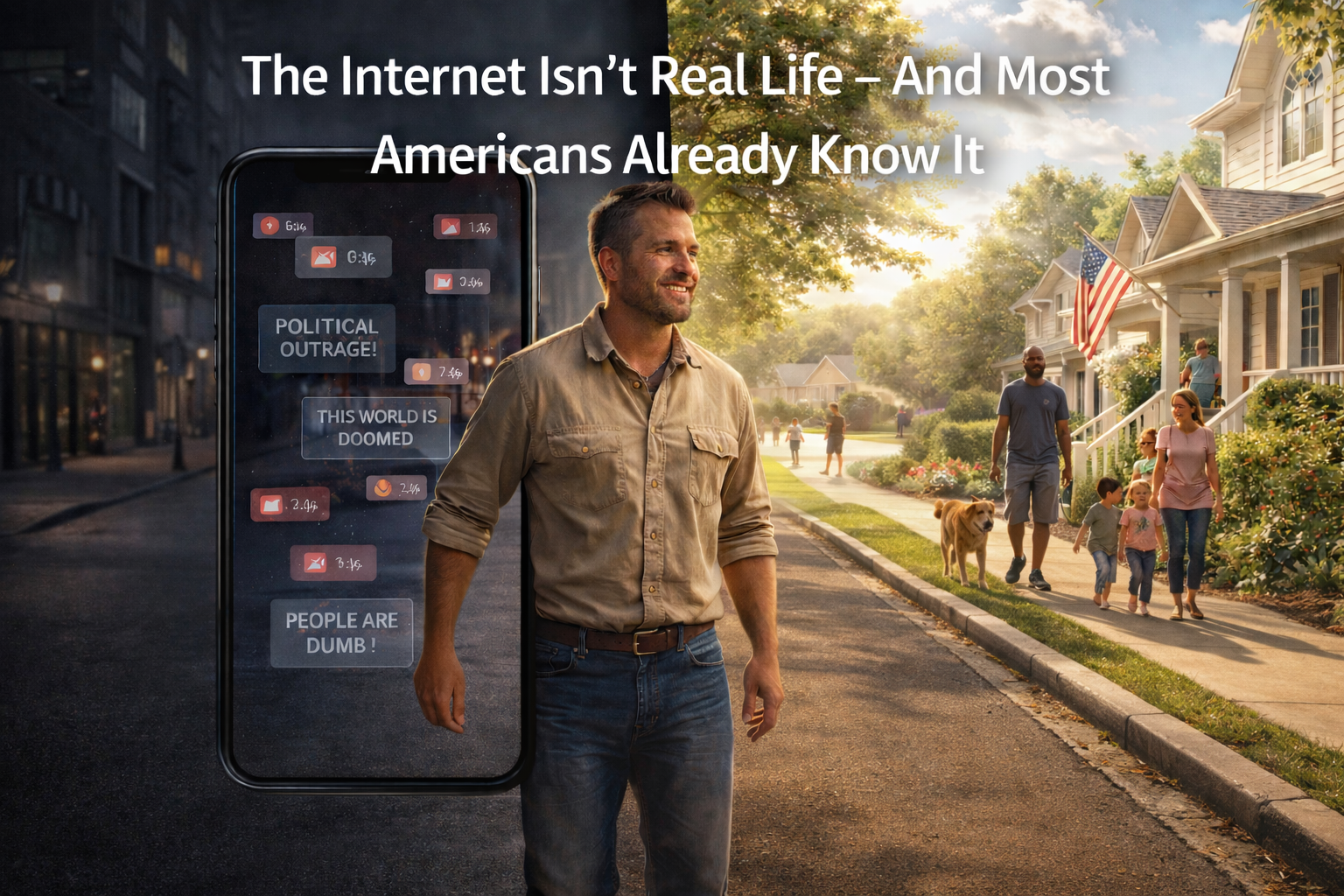
By George Hayes:
I was standing in the checkout line at the grocery store yesterday, same as I do every week. The lady in front of me was chatting with the cashier about her grandkids. The guy behind me gave a polite nod and a “how you doin’?” when our eyes met. A dad and his little boy were arguing over which cereal to get—nothing loud, just normal family stuff. The whole place was organized, calm, people moving through their day with baskets full of milk and bread and whatever else they needed to keep life going. No screaming. No accusations. No one filming a meltdown for likes. Just a bunch of regular folks living their daily lives.
Then I drove home, opened my phone, and the internet was on fire again. Same story every single time.
You’d think, from scrolling X or Facebook or the news apps, that America is one giant cage match with everybody at each other’s throats, shouting, shaming, canceling and accusing each other of their own stupidity. Every headline screams crisis and fear. Every comment section is a war zone. And if you stay in that digital world long enough, you start to believe it. You start to think the country is collapsing, that people hate each other, that normal life is gone.
But I keep doing the same experiment on purpose: I go outside.
I go to Home Depot on a Saturday morning. Guys in work boots helping each other load lumber into trucks. Polite “excuse me” when somebody’s cart is in the way. Folks gathered at the local movie theater, waiting to get tickets and get in. It’s all orderly at the concession stand and everyone gets seated and enjoys the movie they came to see. It’s the same at local festivals where people are laughing, eating, listening to music with no protests, no fights, just neighbors being neighbors.
It never matches the internet. Not even close. And that disconnect is one of the most important things we need to remember right now.
Because the internet isn’t real life! It’s a hall of mirrors built to keep you angry, addicted, and afraid. It rewards the loudest, craziest, most extreme voices. The algorithm doesn’t get paid when you’re at peace enjoying a quiet evening with your family. It gets paid when you’re doom-scrolling, arguing in the comments, and sharing another “this country is finished” post.
Meanwhile, real America—the one you can actually touch and smell and see with your own eyes is still full of ordinary people doing ordinary good things. They’re working, raising kids, helping their neighbor fix a fence, coaching Little League, and saying grace before dinner. They’re not perfect, but they’re not the monsters the internet paints them to be either.
This is where putting God first becomes your secret weapon. When Jesus is actually at the center of your day—when you open the Word before you open the apps, your eyes start to clear. You stop letting the digital noise define reality. You remember that the same Lord who said “Love your neighbor” is still alive and at work in the hearts of regular people doing regular life. You stop believing the lie that everyone is as hateful and divided as the comment section wants you to think.
I talk to folks all the time who feel hopeless because they live online. Their “friends” are the ones feeding them bad advice and fear. They’ve replaced real community with digital outrage. And they wonder why they feel so heavy. The fix is simple, and it’s still available right here in America:
- Log off more.
- Go outside more.
- Look around.
- Look Up, Have you seen the stars lately?
Talk to the cashier the next time you’re out shopping. Smile at the guy in the parking lot. Strike up a conversation at the ball field. Find a church where people actually live what they believe and not just post about it. Surround yourself with flesh-and-blood people who love the Lord and love their families. Find real mentors and real friends, you know the kind who’ll tell you the truth over coffee instead of hiding behind a keyboard.
Faith and freedom work together here like nowhere else. You still have the freedom to choose what you let into your mind and your heart. You still have the freedom to live in the real world instead of the manufactured one. Most of the rest of the planet doesn’t get that choice the way we do.
So here’s my challenge to you this week:
- Put God first—every morning, before the phone. Let His Word set the tone, not the headlines.
- Do a 24-hour social media fast. Notice how much calmer your mind feels.
- Go somewhere public and just observe. Grocery store. Park. Hardware store. See it for yourself.
- Start one real conversation with a stranger or a neighbor. No agenda. Just be human.
- Find your people in real life. Church shop if you have to. Get involved. Build the kind of community the internet can’t touch.
The chaos is loud online because that’s how it makes money. But step outside and you’ll see what I see every single week: most Americans are still just trying to live good, quiet, decent lives. They’re not at war with each other. They’re not the villains in someone’s viral rant. They’re just… people. And that’s still beautiful.
Don’t let the screen steal that truth from you.
Log off. Look up. Live in the Real world